
The Collector's Divide: Are You Chasing the Name or the Craft?
There is a question that quietly divides the world of horology, a question that is rarely asked aloud but lingers in every conversation between enthusiasts. It is a question that separates those who admire the finished product from those who obsess over the process that created it. When you look at a watch, what do you see? Do you see a symbol of status, a piece of heritage, a design icon? Or do you see a miniature universe of gears, springs, and levers, each one painstakingly crafted and assembled by human hands?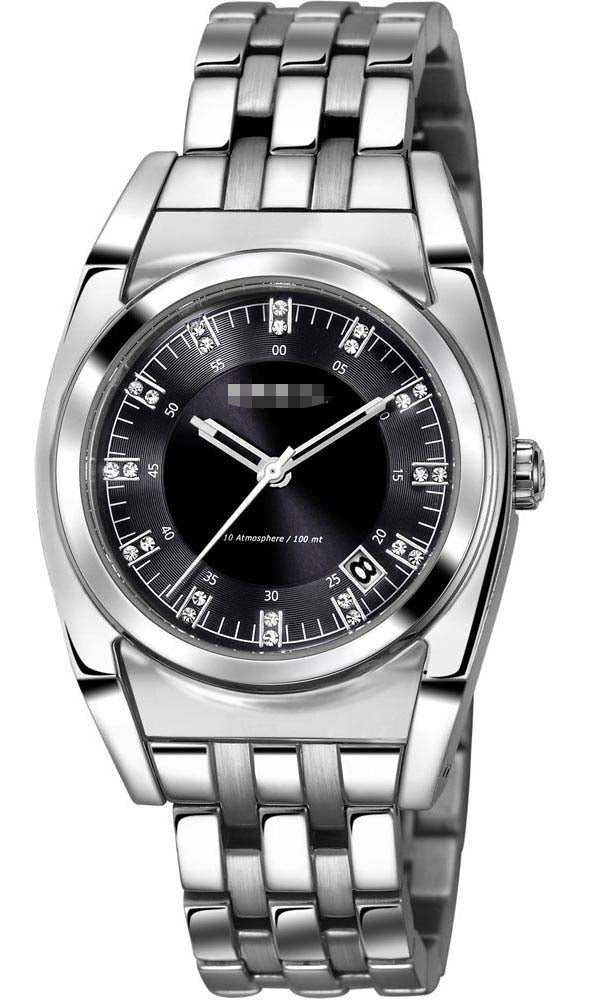
This is not a trivial distinction. It is a fundamental schism that influences how we buy, how we collect, and how we talk about watches. One side is drawn to the glamour, the history, and the prestige. The other is drawn to the engineering, the finishing, and the sheer mechanical ingenuity. Both are valid. Both are passionate. But they often find themselves speaking different languages.
## The Allure of the Finished Watch
For many, the watch is a complete package. It is a piece of design, a symbol of achievement, and a companion for life's journey. The focus is on the whole: the case shape, the dial color, the bracelet, and the brand name. The movement, while important, is just one component among many.
### The Icon Hunter
This collector is drawn to the legends. They want the watch that was worn by the explorer, the diver, the astronaut. They are captivated by the stories that surround the model. They see the watch as a bridge to a romanticized past, a tangible connection to adventure and heroism. The brand's heritage is paramount. They will debate the minutiae of dial variations across decades, the subtle changes in bezel design, and the historical accuracy of a re-issue. For them, the watch is a piece of history that can be worn on the wrist.
### The Design Aficionado
Others in this camp are drawn to the aesthetic. They see the watch as a piece of art, a sculpture for the wrist. They appreciate the interplay of light on a polished case, the harmony of proportions, the boldness of a color choice. They are influenced by trends, but they also have a keen eye for timeless design. They might buy a watch because of the way it looks on their wrist, the way it catches the light, or the way it complements their personal style. For them, the watch is a fashion statement, a form of self-expression.
## The Magnetism of the Movement
On the other side of the divide are those who see the watch not as a whole, but as the sum of its parts. They are less interested in the brand name and more interested in the caliber inside. They are fascinated by the art of the movement.
### The Movement Connoisseur
This collector looks at a watch upside down. They are more interested in the display case-back than the dial. They want to see the balance wheel oscillating, the gears turning, the jewels glinting. They can identify a movement by its architecture, its bridges, its finishing techniques. They argue passionately about the merits of a column-wheel chronograph versus a cam-operated one. They appreciate the difference between a Geneva stripe and a perlage finish.
For them, the movement is the heart of the watch. It is a testament to human ingenuity, a micro-mechanical marvel that performs a seemingly impossible task: measuring time with incredible precision, without batteries, without wires, simply through the interplay of springs and gears.
### The Technical Purist
Some collectors go even deeper. They are not just interested in the movement; they are interested in the history and evolution of the movement. They know which calibers are derived from which base movements. They understand the innovations that defined each era of watchmaking. They are the historians of the craft, charting the development of the self-winding rotor, the co-axial escapement, and the silicon hairspring. For them, the watch is a textbook of engineering history, a living document of technical progress.
## The Core of the Debate
This fundamental divide leads to some fascinating and heated arguments.
### The Argument for the Whole
Proponents of the "watch" perspective argue that a timepiece is greater than the sum of its parts. They contend that the brand, the design, and the heritage are just as important as the movement. A watch, they say, is an emotional purchase. It is about how it makes you feel when you wear it.
Why would I care about the movement if the watch is ugly? they ask. "A beautiful movement in a boring case is still a boring watch. The watch is a piece of design. It is meant to be worn and seen. The movement is hidden away, like the engine of a car. You don't buy a car just for the engine; you buy it for the entire experience." They appreciate the engineering, but they do not let it dominate their decision-making. They see the watch as a holistic creation, where every element must harmonize.
### The Argument for the Craft
Proponents of the "watchmaking" perspective argue that the movement is the soul of the watch. They contend that without a great movement, a watch is just a piece of jewelry. The brand name, they say, is often just a marketing exercise, a way to charge a premium for a product that is mechanically unremarkable.
How can you call yourself a watch enthusiast if you don't care about the movement? they retort. "The movement is the reason the watch exists. It is the part that actually tells the time. Everything else is just packaging. A beautiful dial is nice, but it is the movement that makes the watch a watch, not a bracelet." They see the movement as the ultimate expression of horological art. They are willing to pay a premium for a well-finished movement, even if the watch is in a simple case.
## The Collector's Conundrum
This philosophical divide creates a real dilemma for many collectors. It raises questions that go to the heart of the hobby.
**1. The "In-House" Movement Debate**
Do you need an in-house movement for a watch to be considered a "serious" timepiece? Or is a well-regulated, high-quality movement from a specialist supplier just as good? Some collectors will only buy watches with proprietary movements, viewing them as the pinnacle of watchmaking. Others are perfectly happy with a watch that uses a proven, reliable movement from a third party, arguing that it is the overall package that matters.
**2. The Value Equation**
Does a watch with a spectacular movement but a simple case hold its value better than a watch with a simple movement but a spectacular case and heritage? The answer is not always clear. A meticulously finished movement from a respected manufacture can be a sound investment. However, a watch with a strong brand name and iconic design can also appreciate significantly. The value equation is complex and constantly shifting.
**3. The Rise of Alternatives**
The options available to collectors have expanded dramatically. On one end of the spectrum, you have the prestigious houses that produce some of the most complex and beautifully finished movements in the world. These are the titans of the industry, the Oldest Watch Manufacturers, whose traditions stretch back centuries. On the other end, you have the innovators pushing the boundaries of what a watch can be, including Digital Watch Manufacturers who are redefining timekeeping. In between, there is a vast middle ground. For some, the ultimate expression of personal taste is a bespoke creation, such as Custom Yellow Gold Watches, which allow the owner to specify every detail. This proliferation of choice means that the decision of whether to chase the name or the craft is more complex, and more personal, than ever.
## The Verdict: A Spectrum, Not a Binary
Ultimately, the question of whether you are into watches or watchmaking is not a binary choice. It is a spectrum. Most collectors fall somewhere in between. They appreciate both the design and the engineering. They buy a watch because it is beautiful and because it has a great movement.
The purest "watch" collectors might be tempted by a watch with a simple quartz movement if the design is iconic enough. The purest "watchmaking" collectors might be willing to forgive a lackluster dial if the movement is a masterpiece. But most of us are in the middle, seeking a balance between the two.
## The Reflection
The true beauty of this hobby is that it can accommodate both perspectives. The world of watches is big enough for the icon hunters, the design aficionados, the movement connoisseurs, and the technical purists. We all share a common passion, even if we sometimes disagree on the specifics.
So, the next time you look at a watch, ask yourself: what do I see? The answer might reveal more about your collecting philosophy than you think. The divide between the watch and the watchmaking is the engine that drives the conversation, the debate, and the passion that makes this hobby so endlessly fascinating. And that, ultimately, is the most valuable part of the collection.