
The Golden Price Paradox: Why Precious Metal Watches Cost More Than the Melt Value — And the Steel Submariner That Started It All
There is a moment, when you hold a solid gold luxury watch, that you might wonder about the mathematics behind its price tag. The gold price hovers at all-time highs, currently around $5,000 per ounce [citation:1]. A full gold Rolex Day-Date on a President bracelet contains approximately 180 grams of 18k gold, which translates to roughly 135 grams of pure 24k gold [citation:5]. At current prices, that's about $26,250 worth of raw material for the entire case and bracelet of a watch that retails for over $50,000 [citation:1][citation:5]. Yet the price differential between a steel and gold version of the same watch is rarely just the cost of the metal. This is the golden paradox that has fascinated and frustrated collectors for decades.
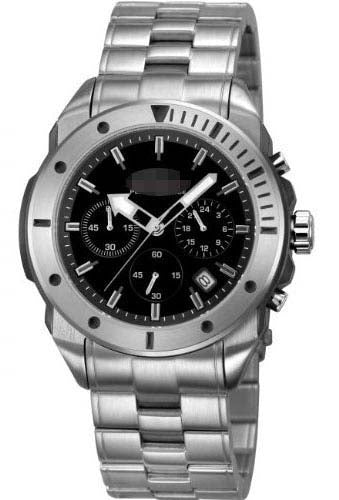
At the same time, a very different kind of Submariner has captured the hearts of enthusiasts — not in gold, but in steel. The Rolex Submariner 16610LV, affectionately known as the "Kermit," celebrated its 20th anniversary as one of the most iconic neo-vintage sports watches ever produced. Its green aluminum bezel, paired with a classic black dial, created a formula so successful that it spawned two successors — the "Hulk" and the "Starbucks." But even as collectors chase these steel icons, the question of gold's value proposition lingers. Let's unravel the economics, the allure, and the enduring appeal of both.
The Material Math: Gold's Real Cost vs. Retail Premium
The gold price has nearly doubled from 2024 levels. In late 2024, the raw metal cost for a full gold Daytona was about $14,175. Today, it's $26,250 — roughly half the watch's retail price [citation:1]. At these levels, some analysts suggest that certain gold watches may not even be profitable for manufacturers without a 25% price increase [citation:1]. This is why brands like Vacheron Constantin are pivoting to titanium, offering an Overseas Tourbillon in grade 5 titanium for £139,900 — a full £30,000 less than its rose gold counterpart [citation:1].
But raw material cost is only part of the story. Let's use the example of a hypothetical dress watch. Imagine a steel watch retails for €5,000. If the brand adds €2,760 worth of gold, the resulting watch should theoretically cost €18,800 if the same profit margin is applied across all components [citation:5]. Yet gold watches often command significantly more than that figure. Why? Because watch brands apply margins not just to manufacturing costs, but to perceived value. Elements with high perceived value — like COSC certification or precious metals — often carry higher markups [citation:5].
This is how an 18k gold dress watch can be priced four or five times higher than its steel sibling, even when the material cost only accounts for a small fraction of the difference [citation:5]. In an era where even Private Label Swiss Watch Manufacturer and Swiss Watch Manufacturer Private Label offerings command premiums, the gap between steel and gold serves as a reminder that luxury pricing is rarely a straightforward calculation.
The Steel Icon: Why the Kermit Still Rules
While gold watches grapple with pricing challenges, steel Submariners have become some of the most sought-after collectibles in the world. The Rolex Submariner ref. 16610LV "Kermit," introduced in 2003 to celebrate the 50th anniversary of the Submariner, remains a standout even among a catalog of icons [citation:2][citation:3]. With its striking green aluminum bezel — a bold move from a brand known for conservatism — the Kermit transformed the 40mm 5-digit Submariner into an instant classic [citation:3].
Rarity and collector demand have driven its value to roughly double its original retail price, with examples changing hands for around $18,673, compared to the approximately $9,000 it was offered for new [citation:6]. The "Flat 4" bezel variant, produced only in the earliest production runs, commands an even higher premium [citation:2]. In a secondary market where the total value of all Submariners ever produced is estimated at nearly $50 billion, the Kermit stands as a testament to the power of scarcity, nostalgia, and a single splash of color [citation:7][citation:11].
This is the irony of the modern watch market: while gold has long been associated with luxury and status, some of the most valuable and sought-after pieces are crafted from humble stainless steel. The Kermit's success paved the way for the "Hulk" (ref. 116610LV) with its green dial and ceramic bezel, and the "Starbucks" (ref. 126610LV), which continues the green bezel tradition in a modern 41mm case [citation:3]. Each generation has built on the legacy of the original, proving that sometimes, the most desirable watches are not the most expensive ones, but the ones with a story.
Two Opposing Views: The Collector's Dilemma
During my exploration of this topic, I encountered several sharply divided perspectives:
Viewpoint A (The Materialist): "Gold watches are the ultimate expression of luxury. They carry intrinsic value that steel can never match. When you buy a gold watch, you are acquiring a tangible asset — a store of wealth that is both beautiful and functional. The premium over steel is justified by the material itself, the additional costs of manufacturing and insuring precious metal pieces, and the perception of value that gold commands. In uncertain economic times, gold is a safe haven."
Viewpoint B (The Skeptic): "Gold watches are a poor investment. They shed value faster than steel models on the secondary market, and the premium over raw material cost is a profit margin exercise, not a reflection of true value. Collectors would be better off buying steel icons like the Kermit, which have consistently appreciated in value. At current gold prices, manufacturers are barely making money on gold pieces, and consumers are paying for the privilege of ownership without a corresponding return on investment."
Viewpoint C (The Pragmatist): "The value of a gold watch is not just in the metal, but in the craftsmanship, the finishing, and the history. Similarly, the value of a steel Submariner is not just in its material, but in its design, its heritage, and its cultural significance. Both have their place in a collection, and the choice between them is a matter of personal preference, not objective investment logic. The key is to buy what you love and let the market do what it will."
These perspectives capture the central tension: is a gold watch a savvy investment in a tangible asset, or a luxury purchase that loses value the moment it leaves the boutique? The answer, as with most polarizing questions in watch collecting, is likely subjective.
The Verdict: Who Should Buy Which?
After extensive research into both gold watches and the steel icons that define modern collecting, I have concluded that there is no single correct answer. Gold watches offer a sense of occasion, a tangible connection to wealth and tradition, and a material that has been prized for millennia. They are not, however, a guarantee of value retention — and with gold prices at record highs, their value proposition is more fragile than ever.
Steel icons like the Kermit, on the other hand, offer a different kind of appeal. They are design objects, historical artifacts, and symbols of a brand's cultural impact. They have proven their ability to appreciate in value, driven by a combination of nostalgia, scarcity, and enduring appeal. For the collector who values function, history, and potential appreciation, steel models offer a compelling case. For those who seek the warmth, weight, and timelessness of gold, the premium is a price worth paying for the experience.
The lingering question — whether gold prices will fall or continue to climb — is one that even the experts cannot answer. But perhaps that is the essence of collecting: the thrill of the chase, the joy of ownership, and the deep satisfaction of a watch that speaks to you, regardless of its material. In a market dominated by OEM Watch Manufacturers and mass production, the decision to choose either is a personal one. Whether you choose the gleam of gold or the cool steel of a Kermit, you are buying more than a watch — you are buying a piece of history.
One final thought: the true value of a watch is not in its material, but in the story it tells. Whether that story is written in gold or steel, it is yours to tell.
Featured image: The Rolex Submariner 16610LV "Kermit," showcasing its iconic green bezel and classic black dial.