
The Mod That Lets You See History: A 60-Year Space Legacy and a Vintage Watch's Transparent Transformation
There is a unique tension in the world of watch collecting between preservation and personalization. On one hand, the reverence for a timepiece's original form, its historical accuracy, and its unaltered state is paramount. On the other, there is a deep-seated desire to connect with a watch on a more intimate level, to see the mechanical heart that drives its soul. This tension is at the core of two parallel stories in 2026: the 60th anniversary of the Omega Speedmaster becoming NASA flight-qualified [citation:3][citation:7][citation:11], and the personal decision of a collector to modify a vintage King Seiko 45KS with a sapphire case back [citation:4]. Both narratives, in their own way, explore what it means to appreciate a watch's legacy while embracing a modern perspective.
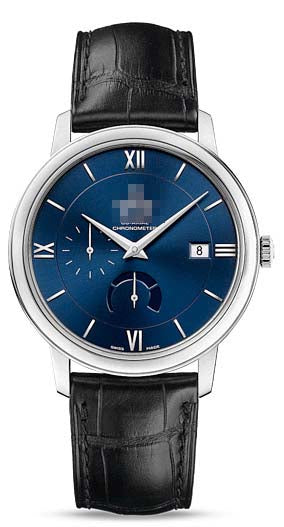
The Legacy of 1965: When a Tool Watch Earned Its Wings
In the spring of 1965, the Omega Speedmaster ST 105.003 accomplished what few would have believed possible for a mechanical chronograph. It survived a battery of NASA tests designed to destroy spacecraft hardware—exposure to 93°C heat in a vacuum, brutal 40 G shocks in six directions, and a punishing 130-decibel noise test [citation:11]. It was the only watch among its competitors to emerge intact [citation:11]. When NASA officially certified it as "flight-qualified for all manned space missions," it wasn't just a triumph for Omega, but a defining moment in watchmaking history [citation:11].
Just three weeks later, the Speedmaster made its space debut on the wrist of astronaut Gus Grissom during the Gemini 3 mission. By the time the Apollo 11 crew landed on the Moon in 1969, the Speedmaster's place in history was cemented [citation:11]. Yet, as one journalist noted during the anniversary celebrations, what stood out most wasn't just the watch's heritage, but its enduring purpose: "It wasn't built to sit in a display case. It was made to be used" [citation:3]. This is a watch with a solid case back, a design choice that prioritizes function over aesthetic display—a fact that brings us to our second story.
Seeing the Movement: The Case for a Sapphire Case Back
Some months into owning a vintage King Seiko 45KS, a collector made a decision that many purists might consider sacrilege: he replaced its original solid case back, adorned with a gold medallion, with a sapphire display back [citation:4]. The reasoning was simple yet profound. For many vintage watches, the solid case back was a necessity born from the need to protect the movement from magnetic fields. However, with modern materials like silicon making movements increasingly resistant to magnetism, a sapphire case back offers a chance to appreciate the craftsmanship of a vintage caliber without compromising its integrity [citation:4].
In the case of the 45KS, the result was transformative. The high-beat movement, a testament to Seiko's horological ambition in the late 1960s, could finally be seen ticking away, its relatively plain yet purposeful decoration coming to life with each winding [citation:4]. It became a reminder that the beauty of a mechanical watch is not just on the dial, but within the movement itself.
Two Opposing Views: The Collector's Dilemma
This modification, however, is not without its critics and challenges. During my exploration of this practice, I encountered several sharply divided perspectives:
Viewpoint A (The Purist): "A vintage watch should remain as it was originally crafted. The case back is part of its identity, its story. Adding a modern sapphire back changes the watch's character and risks its historical integrity. Moreover, it compromises water resistance and, if not done with original parts, can devalue a collectible piece" [citation:2][citation:4].
Viewpoint B (The Enthusiast): "This is a reversible, respectful way to breathe new life into a vintage watch. It allows you to appreciate the movement, which is the very soul of the watch. If done correctly, it's a form of personalization that deepens your connection to the watch. As one collector noted, 'it's an absolute joy to watch this vintage caliber hum to life as I wind it up' [citation:4]. Even on modern watches like the new Omega Speedmaster, there is a desire for this view, with some collectors swapping the solid case back of a Hesalite model for the sapphire display back from the Sapphire Sandwich version [citation:2][citation:6]. The movements are often finished to a high standard and deserve to be seen."
Viewpoint C (The Pragmatist): "Modifying a vintage watch is a personal choice, but it comes with risks. Aftermarket parts can affect water resistance and warranty [citation:2]. It's essential to use a reputable specialist and have the watch pressure-tested [citation:10]. For those who value seeing the movement, it's a worthwhile compromise, but it's not a decision to be taken lightly."
These perspectives highlight a central tension: is a watch a historical artifact to be preserved, or a living object to be experienced and enjoyed? The answer lies in the collector's philosophy.
The Verdict: Who Is This For?
The 60th anniversary of the Speedmaster's flight qualification serves as a powerful reminder that a watch's worth is not just in its appearance, but in its proven reliability and its place in human history [citation:3][citation:7]. It is a tool that earned its reputation under the most extreme conditions. The decision to install a sapphire case back on a vintage King Seiko, while a modern practice, is rooted in a similar desire: to connect with the mechanical marvel that makes a watch tick. It is an acknowledgement that the movement is worthy of being seen [citation:4].
The lingering question—whether this modification enhances or diminishes a watch's value—will remain subjective. But perhaps that is the essence of watch collecting: finding meaning in the details that resonate with you. For the collector who sees the beauty in a high-beat movement, a transparent case back is a window into the heart of the watch. For the traditionalist, the original solid case back is a testament to the watch's original purpose.
One final thought: the Speedmaster's legacy was built on its ability to withstand the brutal tests of a vacuum and extreme temperatures, a tool that was functional above all else [citation:11]. In a similar vein, adding a sapphire case back to a vintage watch allows its internal masterpiece to shine. In a world where Leather Watches Manufacturer and Watches Manufacturer In China produce countless variations, the choice to modify a piece of history is a bold statement. It is a reminder that sometimes, the most impressive detail is the one you never knew you were missing.
Featured image: A vintage King Seiko 45KS held in hand, showcasing its new sapphire case back and the high-beat movement within.