
The Single-Edition Grand Complication That Rewrites the Rules: An Openface Masterpiece
There are watches that tell time, and then there are watches that tell stories—stories of centuries-old craftsmanship, of relentless innovation, and of a commitment to artistry that borders on obsession. The Vacheron Constantin Les Cabinotiers Temporis Duo Grand Complication Openface belongs to the latter category. It is not merely a timepiece; it is a declaration, a testament to what happens when a manufacture pushes its technical and aesthetic boundaries to the absolute limit. I had the rare privilege of spending time with this unique piece, and what I experienced was not just a watch, but a journey through the very soul of high horology.
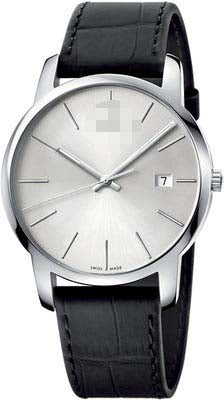
This is a single-edition creation, born from the bespoke atelier of Les Cabinotiers, a department dedicated to fulfilling the most ambitious and personal commissions. The "Temporis Duo" name hints at its dual nature—a watch that measures both civil and sidereal time, a feat of mechanical complexity that few can master. But it is the "Openface" designation that truly sets this piece apart, offering a transparent window into the intricate ballet of gears, springs, and levers that bring this horological symphony to life.
First Impressions: A Presence That Demands Respect
Out of its presentation box, the watch commands immediate attention. The 44mm white gold case is substantial, yet its polished surfaces and refined lines ensure it wears with an elegance that belies its size. The openface design is the first revelation: the dial is skeletonized, allowing the viewer to peer directly into the heart of the movement, a calibre of staggering complexity that combines a perpetual calendar, a minute repeater, a split-seconds chronograph, and a unique equation of time display, among other complications.
The movement itself, the Caliber 2520, is a masterpiece of micro-engineering. Comprising nearly 600 components, it is a dense forest of polished steel and gold, each bridge meticulously chamfered and decorated. The main plate is adorned with a hand-engraved motif inspired by the classical guilloché patterns of the 18th century, a detail that speaks to the brand's unwavering commitment to traditional finishing techniques. The hours and minutes are displayed via off-center hands, while a sub-dial at 12 o'clock indicates the day and month, and a retrograde date display adds a touch of dynamism to the lower half of the dial.
Dial Details: A Window to a Mechanical Universe
What makes the "Openface" version so compelling is its transparency. The skeletonized dial does not merely expose the movement; it frames it, transforming the mechanics into a visual narrative. The bridges and mainplate are skeletonized in a way that creates a sense of depth, with layers of movement components visible at different levels. The sapphire crystal is treated with anti-reflective coating, ensuring that the view is unobstructed, and the hands are blued steel, offering a perfect contrast against the gold-toned movement.
The equation of time display is a particular highlight. This complication, which shows the difference between mean solar time (the time we use daily) and true solar time (based on the sun's actual position), is one of the rarest and most prestigious to master. Here, it is displayed via a hand on a sub-dial at 9 o'clock, indicating whether solar time is ahead or behind civil time by up to 15 minutes, a subtle yet profound reminder of our connection to the natural world.
Movement Mechanics: The Masterpiece Within
At the heart of this horological marvel is the in-house Caliber 2755 QP (Quantieme Perpetual), a manually wound movement that boasts a 58-hour power reserve . It operates at 18,000 vibrations per hour, a frequency chosen for its historical significance and its ability to deliver a smooth, unhurried sweep of the seconds hand. The movement is certified with the Hallmark of Geneva, a testament to its exceptional finishing and accuracy, and it features a tourbillon, a device designed to counteract the effects of gravity on the balance wheel and hairspring .
The tourbillon is visible at 6 o'clock, a mesmerizing sight as its cage rotates once per minute, its escapement and balance wheel performing their delicate dance. This is high complication at its finest, a reminder that the art of watchmaking is as much about physics as it is about aesthetics.
On the Wrist: A Symphony of Craftsmanship
Wearing the Temporis Duo is an experience that transcends the functional. The weight of the white gold case is a constant, reassuring presence, a tangible reminder of the value and craftsmanship it contains. But despite its complexity, the watch is surprisingly comfortable, thanks to its sculpted lugs and ergonomic design. The crown, engraved with the brand's emblem, operates with a smooth, precise action, and the slide for the minute repeater on the left side of the case offers a satisfying, tactile click.
The beauty of this watch, however, is not just in the wearing, but in the listening. The minute repeater, a complication that chimes the time on demand, is one of the most complex and revered in watchmaking. Here, it is powered by a series of hammers and gongs, and its chime is a pure, resonant sound that is a joy to hear. Activating the repeater, and hearing the hours, quarters, and minutes ring out, is an experience that connects you to a tradition that dates back centuries.
Three Opposing Views: The Collector's Crossroads
During my time with the watch, I encountered several sharply divided perspectives:
Viewpoint A (The Connoisseur): "This is the pinnacle of watchmaking. The combination of complications, the quality of finishing, the unique design—it all adds up to a masterpiece that stands as a testament to the art of horology. The openface design is a bold move, but it pays off by transforming the movement into a piece of art that you can wear on your wrist. This is a watch for those who truly understand and appreciate the art of watchmaking."
Viewpoint B (The Skeptic): "Is there a market for a watch that requires a PhD in horology to fully appreciate? The watch is technically brilliant, but it's also incredibly dense. The dial is a challenge to read; the information is presented in a way that requires time and attention to decode. It is a watch for the sake of watchmaking, not for the wearer. For the same price, you could commission a timepiece from a Private Label Swiss Watch Manufacturer or a Swiss Watch Manufacturer Private Label with a more legible design and a more personal story."
Viewpoint C (The Pragmatist): "The watch is a marvel, but it's also a relic. In an age of smartwatches and digital connectivity, the need for a minute repeater or a tourbillon is purely aesthetic. The watch is a celebration of heritage, but it's also a product of a bygone era. It's a piece to be admired, not worn. The sheer complexity and cost will limit its ownership to a select few, and that's precisely the point. It's not a watch for the masses; it's a watch for the one."
These perspectives capture the central tension of the Temporis Duo: is it a masterpiece of horological art, or is it a product of excess that has lost touch with the practical needs of the wearer? The answer, as with all great works of art, is likely subjective.
The Unanswered Question: Where Does the Value Lie?
Beyond the aesthetic and mechanical considerations, the Temporis Duo raises a profound question about value in modern watchmaking. In an era where OEM Watch Manufacturers can produce complex calibres with remarkable efficiency, what justifies the price tag of a unique piece like this? The answer lies in the intangible: the history, the hand-finishing, the rarity, and the story.
The Temporis Duo is not a watch for everyone. It is a watch for the one person who commissioned it, a reflection of their unique vision and their appreciation for the art of watchmaking. It is a piece that will, in all likelihood, never be sold, but will be passed down through generations, a tangible link to a tradition of craftsmanship that is increasingly rare in our mass-produced world.
The Verdict: Who Should Buy This Watch?
After extensive time with the Temporis Duo, I have concluded that it is not a watch to be reviewed, but a watch to be experienced. It is a singular piece, a masterpiece of horological art that stands apart from the ordinary. It is a watch for the collector who understands the difference between a timepiece and a statement, for the connoisseur who appreciates the intricacies of the movement as much as the beauty of the design.
The lingering question—whether the watch justifies its price—will remain unanswered for most, but for the one who has chosen it, the answer is unequivocal.
One final thought: the Temporis Duo is a reminder that watchmaking is not just about telling time; it's about capturing it. It is a moment, frozen in gold and steel, a testament to the power of human ingenuity and the enduring allure of the mechanical.
Featured image: The Vacheron Constantin Les Cabinotiers Temporis Duo Grand Complication Openface, showcasing its intricate skeletonized dial and white gold case.