
The Titanium Revolution: How a Regulator Master Just Reinvented the Integrated Sports Watch
There is a moment in watchmaking history when a brand decides to break its own mould. For a manufacturer that has spent decades perfecting a singular aesthetic—the oversized onion crown, the coin-edge bezel, the bold regulator dial—the decision to create something entirely new is never taken lightly. Yet here we are, staring at a watch that manages to be both a radical departure and an unmistakable continuation of a legacy.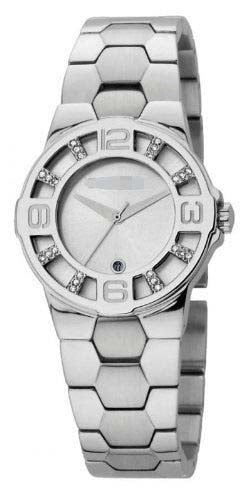
The latest release from Lucerne represents the first time in the brand's history that case and bracelet merge into one seamless entity. It is a statement of intent, a declaration that even the most tradition-bound houses can evolve. But as with any bold move, it has sparked passionate debate among collectors who are divided on whether this represents a brilliant evolution or a misguided attempt to chase a trend.
## The Forging of a New Identity
The case is crafted entirely from Grade 5 titanium, a material prized for its exceptional strength-to-weight ratio and corrosion resistance [citation:1]. At 41mm in diameter and just 12.75mm thick, it represents a significant step towards wearability, shedding nearly 2mm from previous models [citation:2]. The media-blasted finish gives it a utilitarian, almost tactical appearance, while the polished knurling on the bezel adds a touch of jewellery-like refinement [citation:7].
The integrated bracelet is perhaps the most significant departure. It is organic, flowing seamlessly from the case with a lizard-scale link design that feels both futuristic and organic [citation:11]. The butterfly clasp sinks into the underside of the bracelet, eliminating the bulk that often plagues integrated designs [citation:2]. This is a watch that has been engineered for comfort as much as for aesthetics.
## The Regulator Heart
True to the brand's DNA, the dial retains the regulator layout that has become a signature. The hours are displayed in a raised sub-dial at 12 o'clock, the minutes take centre stage, and at 6 o'clock, a retrograde seconds hand performs a mesmerizing dance, jumping back to zero every thirty seconds [citation:1].
The "Sand" iteration features a sandblasted natural brown dial with blue CVD-coated hour markers and hands [citation:2]. The combination of warm earthy tones and cool blue accents creates a striking contrast that is simultaneously modern and timeless. The three-dimensional construction, with its angled rehauts and elevated sub-dial, adds depth that photographs cannot fully capture.
Inside beats the Calibre C.6001, an in-house-designed automatic movement manufactured in collaboration with La Joux-Perret [citation:2]. With a 55-hour power reserve and a tungsten rotor, it represents a significant investment in horological engineering. The movement is visible through a sapphire caseback, its ruthenium plating and radiating C?tes de Genève finishing providing a fitting showcase of technical excellence.
## The Great Debate: Three Perspectives That Challenge the Narrative
### The Purist's Concern: A Trend Too Far?
The traditionalists argue that the brand has sacrificed its identity to chase the integrated-bracelet trend that has dominated the luxury sports watch market for years. By creating a watch that looks more like its competitors than its own heritage, they contend that the brand has lost what made it special.
This is a brand that built its reputation on being different, one collector lamented in a recent forum discussion. "The onion crown, the coin-edge bezel, the bold colours—those were the things that made a Chronoswiss instantly recognisable. This new model, while beautiful, could be from almost any brand. It's a dilution of the DNA."
### The Pragmatist's View: Evolution is Survival
The modernists see this release as a necessary and welcome evolution. They point out that the brand has not abandoned its signature elements—the onion crown remains, the regulator layout is intact, and the knurling on the bezel is a direct nod to the past. What has changed is the execution, and they argue that the result is more refined and wearable than anything the brand has produced before.
Watches must evolve or die, a younger collector countered. "The brand has taken its core identity and reinterpreted it for a new generation. The bracelet is phenomenal, the size is perfect, and it still feels like a Chronoswiss. This isn't selling out; it's growing up."
### The Value Question: Is the Price Justified?
At CHF 11,800, this watch enters a competitive price bracket [citation:1]. The question is whether the combination of titanium construction, an integrated bracelet, and a retrograde complication justifies the cost.
For context, the landscape of watch manufacturing has become increasingly sophisticated. The traditions of horology are preserved by a Top Watch Manufacturer, where the pursuit of excellence often transcends practical necessity. Meanwhile, the rise of specialist production has led to situations where even a Rubber Watches Factory can produce straps of exceptional quality, blurring the lines between mass production and bespoke craftsmanship. The limited edition nature of this piece, with only 100 examples of each colour, adds a layer of exclusivity that some collectors find compelling.
## The Wearing Experience
Despite its chunky appearance, the Pulse One is remarkably comfortable on the wrist. The titanium construction keeps the weight down to the point where you almost forget you are wearing it [citation:7]. The short lug-to-lug distance of 46.27mm ensures that it fits snugly, even on smaller wrists [citation:2].
The retrograde seconds is a constant source of delight. Watching the hand sweep across its arc and then snap back to zero is a hypnotic experience, a reminder of the mechanical artistry that lies within. The blue CVD-coated hands provide excellent legibility against the warm sand dial, and the lack of luminous material, while perhaps a missed opportunity, does not detract from the overall clarity.
## The Verdict: A Bold New Chapter
The Pulse One Sand is a fascinating release because it forces us to confront what we truly value in a watch. Is it the provenance? The craftsmanship? The willingness to evolve?
There is no single correct answer. The debates will continue. The critics will point to the trend-chasing. The supporters will celebrate the ambition. Both are right. And that, perhaps, is the mark of a truly interesting watch. It doesn't demand universal approval. It simply asks that you look, and decide for yourself whether this reinvention is worth the investment.
For those who prefer an even more distinctive approach to personal timepieces, the option of commissioning a creation from a Custom Diamond Watches specialist offers a different kind of exclusivity—one where the owner's vision takes centre stage. But for now, the Pulse One stands as a testament to the fact that even the most established houses can surprise us. It is not just a new watch; it is the beginning of a new era. And that, in the world of mechanical timekeeping, is something worth celebrating.