
The Watch That Outlived Its Owner: A Vintage Diver, a Family Dilemma, and the Uncomfortable Truth About Passing Down Time
There is a particular kind of silence that fills a room when a watch collector is asked, "Who gets all of this when you're gone?" It is not the silence of avoidance. It is the silence of a question that has been politely ignored for decades, suddenly made audible. The vintage watch on the table—a modest, mid-century diver with a dolphin etched on its case back—is not valuable enough to warrant an auction house. It is not rare enough to anchor a museum display. And yet it represents something far more complicated than its market price: a lifetime of quiet obsession, condensed into thirty-five millimeters of stainless steel. The question of what happens next is where the romance of collecting collides with the arithmetic of mortality.
## The Watch in Question: A Brief Anatomy of the Modest
The object at the center of this dilemma is a hand-wound sports watch from the early 1960s, a model that has become something of a cult favorite among vintage enthusiasts precisely because it does so much with so little[citation:1]. Its case measures a restrained 35.5 millimeters in diameter, with a lug-to-lug span of roughly 43 millimeters and a thickness that barely crests ten millimeters[citation:1]. It is powered by a seventeen-jewel manual-wind caliber beating at eighteen thousand vibrations per hour, offering a power reserve in the neighborhood of forty-five hours[citation:1]. The dial is white, the indices are applied, and the crystal is a tall dome of acrylic that catches light in a way modern sapphire simply cannot replicate.
What makes this particular watch interesting—beyond its agreeable proportions and its unpretentious movement—is the small dolphin engraved on its case back. In the taxonomy of vintage sports watches, that aquatic mammal was not merely decorative. It signified a degree of water resistance, a promise that the watch could survive a splash or a swim without surrendering its internals to corrosion[citation:1]. The watch was never a luxury object. It was a tool, priced for the working man, built to be worn and worn out. That it survived six decades at all is a minor miracle of care, or luck, or both.
### Why Collectors Care About a Watch Nobody Remembers
The vintage watch market has a peculiar relationship with obscurity. A Rolex Submariner needs no introduction. A Speedmaster has a mythology. But a modest hand-wound sports watch from a Japanese brand's budget line? That requires a different kind of attention. Collectors who gravitate toward these pieces tend to be motivated by something other than investment. They are drawn to the purity of the object: a simple time-only movement, a case that has aged honestly, a dial that has developed the kind of patina no factory can replicate. In a market increasingly dominated by hype and waitlists, the humble vintage diver offers something almost radical: a watch you can actually wear without fear.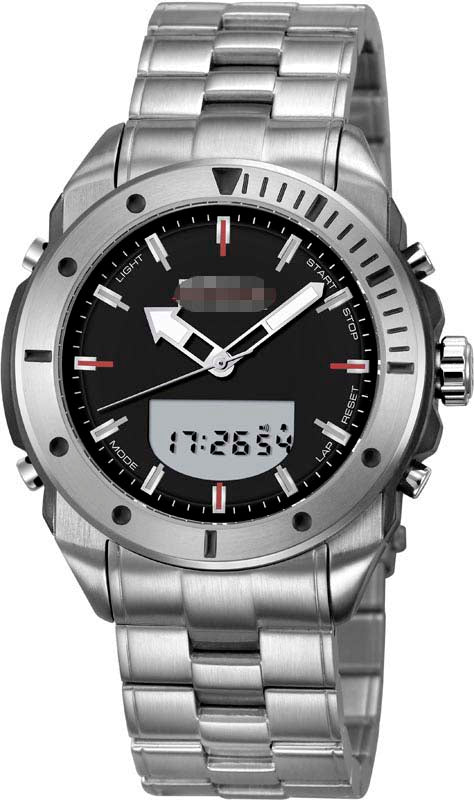
For those who source and distribute watches at scale, the lesson is not lost. Even the most entry-level Wholesale Watches channels understand that provenance and patina sell stories, not specifications.
## The Dilemma: What Happens When Nobody Wants Your Watches
This brings us to the uncomfortable heart of the matter. A recent conversation among collectors on a popular horology podcast raised a question that few enthusiasts want to confront directly: what happens to a watch collection when there is no obvious heir[citation:2][citation:4]? The hosts discussed the scenario of a collector whose family members have no interest in watches, no sentimental attachment to the objects, and no desire to become custodians of a hobby they never shared. The options, as they outlined them, are stark: sell the collection piece by piece, hope that a museum or a fellow collector will take the entire lot, or resign oneself to the possibility that the watches will be scattered, sold for whatever the market will bear, and forgotten.
The podcast hosts admitted that they fancy themselves curators of focused collections, and the thought of those collections being split up is genuinely distressing[citation:2]. But sentimentality is not a legal instrument. A will can specify that a watch collection be kept together, but it cannot compel an heir to care. It cannot manufacture passion where none exists. And it cannot answer the question that haunts every collector who has ever looked at their shelf and wondered, "What is all of this for?"
### The Case for Selling: Pragmatism Over Sentiment
One reasonable position—perhaps the most reasonable—is that watches are meant to be worn, and if your heirs will not wear them, they should go to someone who will. Selling a collection, whether through an auction house, a dealer, or a private sale, ensures that the watches re-enter the ecosystem of people who actually want them. The money can be passed down instead, which is arguably more useful than a box of mechanical objects that require servicing every five years. This view holds that the collector's legacy is not the objects themselves but the enjoyment they provided during the collector's lifetime. Clinging to the hope that a disinterested nephew will suddenly discover a passion for vintage horology is, from this perspective, a form of denial.
### The Case for Keeping: The Argument From Meaning
The counterargument is that watches are not merely commodities. They are vessels of memory. A watch worn every day for thirty years absorbs the sweat, the scratches, and the small rituals of a life. It becomes a physical record of a person in a way that a bank transfer never can. Those who argue for keeping collections intact—whether within a family or by donating them to a museum or a specialized archive—insist that the value of a watch is not exhausted by its market price. The dolphin on a case back is not just a water-resistance certification. It is a reminder of a particular moment in industrial history, a particular philosophy of design, a particular way of making things that has largely disappeared. To scatter such objects is to participate in the erasure of that history.
### The Suspense: A Third Path Nobody Talks About
Here is where the conversation becomes genuinely interesting. Both the sell-it-all and keep-it-forever camps share a hidden assumption: that the collection must either remain whole or be dissolved. But there is a third possibility, one that the podcast hosts only gestured toward: the deliberate, curated dispersal of a collection to people who will actually use and appreciate the individual pieces. Instead of selling everything to the highest bidder or forcing a reluctant heir to become a custodian, a collector could identify young enthusiasts, mentees, or even strangers who have demonstrated genuine passion, and pass specific watches to them with the story attached. This is not a legal strategy. It is a human one. And it requires a kind of generosity that most collectors, understandably, struggle to muster while they are still alive to enjoy their watches.
The suspense, then, is not whether the watches will survive. They will. Stainless steel is remarkably durable. The suspense is whether the meaning attached to them will survive the transition from one pair of hands to the next. That is a question no will can answer.
## What the Vintage Market Reveals About the Future of Collecting
The fate of a single vintage diver might seem like a small thing. But the question it raises scales upward. The watch industry is currently producing more limited editions, more collaborations, and more "collectible" objects than at any point in its history. Every week brings a new release with a numbered case back and a story about heritage. Yet the infrastructure for what happens to these objects after the first owner is gone remains remarkably underdeveloped. Auction houses handle the high end. Dealers handle the middle. But the vast majority of watches—the modest vintage divers, the forgotten quartz pieces, the mid-range automatics that were never meant to be heirlooms—fall into a gap.
This is where the broader machinery of the industry becomes relevant. The Watch Factory ecosystem that produces these objects is sophisticated, global, and relentlessly efficient. But the aftermarket ecosystem for preserving their meaning is not. For every collector who carefully documents their watches and plans for their dispersal, there are dozens who simply hope for the best. The result is a slow erosion of provenance, a gradual forgetting of the stories that made these objects worth caring about in the first place.
### A Modest Proposal for the Sentimental Collector
If there is a practical lesson to be drawn from this reflection, it is not a dramatic one. It is simply this: write it down. Document the watches. Record the stories. Tell someone—anyone—why the dolphin on the case back matters, why the acrylic crystal is better than sapphire, why the hand-wound movement feels different from an automatic. The objects will survive regardless. The meaning is what requires maintenance. And unlike a mechanical movement, meaning does not come with a service interval. It must be tended to deliberately, or it will stop.
For those who work in the global supply chain that brings watches into the world, from the assembly lines of Watch Factories In China to the boutique floors of Europe, the message is worth hearing. Every watch ever made will eventually outlive its first owner. What happens next is not a manufacturing problem. It is a human one.
## The Watch on the Table, Still Ticking
The vintage diver on the table is still running. The acrylic crystal has a few scratches. The case has been polished at some point, perhaps too aggressively, softening the edges of the lugs. The dolphin on the case back is worn but legible. It is not a valuable watch. It will never appear in a glossy auction catalog. But it has survived, and it has a story, and the only question that remains is whether anyone will be around to tell it.
The answer, frustratingly, is not yet written. It depends on a conversation that most collectors are not ready to have, a decision that most families postpone until it is too late, and a recognition that the value of a watch is not always measured in currency. The dolphin keeps ticking regardless. It has no opinion on its own future. That burden belongs to the living, and it is heavier than it looks.